Monday, July 4, 2011

Mary Broh Must be Called to Order: Human Rights Violations Unacceptable


It has come to our attention that the Acting City Mayor of Monrovia, Madam Mary T. Broh is using an iron-fist leadership by intimidating and harassing residents with her Monrovia City Police Force in and around the city of Monrovia. Madam Broh is in the habit of harassing civilians she accuses of littering the streets or for leaving children walk alone in the streets. She at the same time convicts her accused and punishes them publicly. The nature and style of such use of power is no different from the sad days of Chuky Taylor and his Anti-Terrorist Unit (ATU). The only difference is that Chucky and his ATU were well armed, and we can only imagine what would happen if Broh and her Monrovia City Police were armed.


Madam Broh must realize that as Acting Mayor she has very limited power which she must fully exhaust before going beyond the margins. She must also be informed that as Mayor – acting or proper - she has no prosecutorial power to try, nor a judicial power to convict and sentence people. I have personally witnessed her excesses, and the report by Front Page Africa of a helpless mother convicted in Broh’s ‘street court’ is troubling. Front Page Africa online reports and shows picture of a woman ‘pumping tire’ for allegedly leaving her child walk alone in the streets of Monrovia. This is a serious miscarriage and an abuse of the rights of that poor woman. This woman is a mother of children to be humiliated publicly for an alleged crime. Besides, she has her rights under Liberian laws to defend herself in court for any allegations against her. That right was not recognized, but abused by the Acting Mayor and her troops. This is a terrible signal of the emergence of a powerful and unchecked establishmentarian in President Sirleaf’s inner circle.

We use this time to call on the City Council of Monrovia to put the Acting Mayor to check and define her terms-of-reference openly. We also want to call the immediate attention of President Sirleaf to these excesses and to make her know that they have the proclivity of undermining the human rights credentials of her administration

Signed
Ibrahim Al-bakri Nyei
Independent Campaigner for Democracy and Social Justice

Monday, May 16, 2011

Nyei's Speech at the National Legislature


Speech Delivered at the Public Hearing on the African Youth Charter at the Legislature on May 13, 2011 by Ibrahim Al-bakri Nyei, President of the National Muslim Students ; Association of Liberia

Honorable Chairman and Distinguished Members of the Joint House Committee on Youth and Sports, Judiciary, Gender and Child Development; Officials of the Ministry of Youth and Sports, the Ministry of Education; Fellow Youth Leaders; Members of the Press; Ladies and Gentlemen

I bring you greetings from the National Muslim Students Association of Liberia. I feel honored by the invitation to make a presentation before this August body on the African Youth Charter. Africa has a growing population of young people, and the youth constitute a very significant element in the continent’s development. In Liberia alone, about 64% of the 3.5 million people are below the age of 35. It is within this category that the repository for the transformation and development of this country lies.

Liberia has a large reservoir of youthful talent and we can build this country on using the energy of the youth. But only if we give young people opportunities to realize their potentials. Until the policy makers tap on those talents by creating the necessary environment for the individual and collective advancement of the young people, we will continue to vacillate in poverty and illiteracy.
The African Youth Charter presents a unique opportunity for the development of the African continent. The charter is a roadmap to poverty reduction, good governance and the rule of law in every African state, and Liberia cannot afford to be left behind as this progressive train of youth development rails through the continent.

All of the provisions of the African Youth Charter have appeared in so many different forms - in speeches made by politicians, or in policies designed by successive governments in Liberia, but never promulgated nor implemented. So there is nothing really strange in the African Youth Charter in Liberia, and there is nothing stated in the Charter that is not of immediate priority to our development as a post-war nation, and as a third world economy. We therefore have no option in Liberia, but to ratify this document and mainstream it in our development programs.


Let me call your attention to some thematic areas of the Charter honorable ladies and gentlemen.
The charter defines youth as individuals between 15 and 35 years of age; it outlines the rights, freedoms and responsibilities of young people, as well as the duties to be performed by Liberia as a signatory state, to advance the rights of young people.

I. Youth participation in Governance
In Liberia, young people have played a major role in the various stages of our country’s development, but in most cases as proxies fronting for people with parochial and hidden agendas. Sometimes young people who have been given the opportunity to participate in public activities have benefited mostly as a result of extreme roles in political processes, and so their participation end up not as a right, or on the basis of merit but as a dividend from a ‘do or die’ campaign. The African Youth Charter creates a legal framework for youth participation. Ladies and gentlemen if this charter is ratified in Liberia, young people will have the right to actively participate in all aspects of our political and socio-economic developments.

In Liberia, the minimum age requirement for one to become a member of the House of Representatives is 25, 30 for the House of Senate and the 35 for the Presidency and Vice Presidency. Those are fairly young ages, and the AYC calls for that. But what is lagging in Liberia is the necessary instrument of economic empowerment and sound education that facilitate conscientious participation. A system of generational complicity denies young people in many ways; and the property accumulation laws restrict many young and competent people from competing for roles in governance. Therefore, honorable lawmakers, we from the National Muslim Students Association of Liberia believe that ratifying this charter and overseeing its implementation will facilitate youth participation in local governance and decision making at all levels in Liberia.

The ratification of this Charter will just be a one step, because the local version which is the National Youth Policy of Liberia will also have to be enacted into law by your honorable August body. The next stage will be supporting and overseeing its implementation through appropriate budgetary allocation, and demanding transparency and accountability in youth service programs.

II. Education and Skills Development
One of the problems we have in Liberia today is the unavailability of quality education to young people all over the country. In some parts of the country where there are schools, there will be no quality; and in some areas there is no school at all. Every society that pays lip service to education indirectly promotes poverty and underdevelopment. Liberia needs affirmative action on education for its marginalized youths, particularly those in rural communities, and the girls. This Charter advocates for equal access to all levels of high quality education. Multiple forms of education are proposed to us – including formal, non-formal, informal, distance learning, and life-long learning – so as to meet the diverse needs of young people. The problem of education in Liberia cannot be overemphasized, and the need for our country to develop and adopt methods of education that are relevant to our contemporary needs cannot be understated. Ratifying, domesticating and implementing the African Youth Charter will take us a long way in building trained manpower for the development of this country which will in effect reduce poverty considerably.

III. Economic Empowerment and Sustainable livelihoodsUnemployment among Liberian youths is contributing to many social problems in our country. The real data on unemployment is not yet clear, because there have been debates in the country on what constitute employment and unemployment, and the arguments have mostly been on political conveniences. But the reality is clear to us that most of our young people do not have job, or do not have the capacity for the job available, or there is no job at all. We cannot make everybody to get the same level of training and education before making employment available across the country; but I am sure we can lay the foundations through which everyone can get a livelihood from the level and quality of training he/she gets.

Unemployment in Liberia is largely a youth issue. This has been marked as a trigger of crime, deviant behavior and even violent conflict. The African Youth Charter affords young people the right to gainful employment and mandates states to focus on macroeconomic policies that lead to job creation for young men and women. In particular, Liberia will be required to develop measures to regulate the informal economy, where the majority of young people work, and to promote alternative employment opportunities and entrepreneurship. Let me state here that the economic empowerment of the young people of Liberia will go a long way in providing for the livelihood of the entire population.

IV. Peace and Security
Conflict is another issue that limits developmental opportunities for many young people across Africa. We are quite aware of the role of the youth in the civil wars that destroyed this country. Peace and security cannot be sustained without the participation the young people. The AYC mandates states to engage in capacity strengthening of young people and youth organizations in the fields of peace building, conflict prevention and conflict resolution. In addition, under the Charter, Liberia like any other signatory state will be obligated to condemn armed conflict and institute all possible measures to prevent the participation, involvement, recruitment and sexual slavery of young people in this context.

Finally, Distinguished Lawmakers, ladies and gentlemen, let us be clear about our intention to develop and transform this country. We need no more agenda on youth development in Liberia than the African Youth Charter and its local version the National Youth Policy. You need no more vision of progressive development, economic empowerment, youth participation than the African Youth Charter. So for those of our leaders who have always entreated us with speeches, the African Youth Charter is a one stop shop opportunity for you to demonstrate your intention and commitment to Liberia’s development through the young people.

In addition to the numerous rights afforded to young people, the charter also outlines the responsibilities that young people bear towards their families, the society and the state. It is of paramount importance that young people become the custodians of their own development, partake fully in citizenship duties, and contribute towards the economic development of their country. With these rights young people will become the vanguards of developing Liberia, preserving, its cultural heritage, making it compete with other nations globally. Therefore honorable lawmakers, I believe you want the best for this country, and you cannot afford this to be delayed. The National Muslim Students Association of Liberia therefore recommends that you concur with the House of Senate in ratifying this Charter.

I thank you all.

Nyei's Speech at the US Embassy Public Diplomacy Section


Speech Delivered at the Interactive Panel in Commemoration of Young African Leaders Forum at the United States Embassy Public Diplomacy Section in Monrovia, May 12, 2011by Ibrahim Al-bakri Nyei, President of the National Muslim Students Association of Liberia

Her Excellency Linda Thomas-Greenfield, U.S. Ambassador to Liberia, Officials of the US Embassy, Members of the Panel, Invited Guests, Ladies and Gentlemen

I bring you greetings from the National Muslim Students Association of Liberia. I am personally gratified and honored by your invitation to speak at this Young African Leaders Dialogue. This day also falls in the month we celebrate what has been popularly dubbed as ‘African Liberation Day’. I have been one of those who have continuously challenged the limited concept of African liberation under the guise of territorial sovereignty. But as an Afro-optimist encouraged by the emergence of progressive intellectualism in the African youth, and the wave of democratization of African politics, I am filled with the hope that one day Africa and its people will be free of the scourges of poverty, bad governance, and neo-imperialism.

Two days from now (May 14) we will be celebrating in Liberia what we call ‘Unification Day’. As we meet here today my fellow panelist and distinguished ladies and gentlemen, we must in mutual exchanges make attempts to understand ‘Unification’ in the context of developments in our country. I am particularly pleased by the theme of this occasion: ‘Unification – a meeting of the minds’; because it is only through meetings of the minds we will be able to discern the complex problems of our country, and derive sustainable solutions.

What then is Unification in the context of Liberia? And what do we have to show as a symbol of Liberian identity that serve (s) as the natural magnet that pulls us together and portray a Liberian affinity amongst us in Liberia, and amongst Liberians in other parts of the world. What distinguishes a Liberian from other people of the black race?

Our country has suffered years of marginalization in its political and socio-economic spheres since independence. In fact, the foundation of the Republic of Liberia was rested on separatist and segregationist premises which are historically responsible for the cultural confusions, and class divisions we have. We have been haunted by this segregationist establishment, and today we find it very difficult to neutralize those forces that keep us apart. With freed men and women from the United States of America imposing American traditions on African people, two different cultures and traditions in addition to the numerous different African sub-traditions existed in Liberia and in constant confrontations. The result today is a nation with a people in lost identity. This is probably why Prof. Amos Sawyer has launched an enquiry into the kind of civilization in Liberia. Prof. Sawyer has asked “is Liberia an outpost of American civilization or an element of African civilization?” I hope from this forum we will be able to answer this question, and not only that, but to popularly promote the kind of civilization that we find common to our heritage, and which is appealing enough to unite us as Liberians – children of African ancestry.

Language is the lifeblood of every culture and civilization. It constitutes a significant instrument of identity which every society cannot afford to lose to the uncontrolled wave of modernity. We have English very unique to us, and up to now we have not developed and popularized a script on our Liberian English. This Language could be an effective means of official written and spoken communication in promoting a unique identity and unity amongst us. We also have languages in Liberia that have written scripts to promote a language identity for this country.

In some countries Like Kenya, Swahili is popularly spoken in addition to English, and in Rwanda Kinyarwanda, French and English are all used as official languages. This is happening in other African countries, and there are many parts of Africa with a common general language that promotes unity, even if not for official transactions, like the Tri language in Ghana, the Mende in Southeastern Sierra Leone. So I join those in Liberia who advocate for the teaching and popularization of a Liberian language, and I implore those carving our national vision to consider the issue of language as an instrument of unity and identity.

It is true that we do have multiple identities, many of which are competing identities. One of the challenges of governance in Africa, particularly Liberia today has to do with how we manage our various ethnic, religious, and other identities. We are too divided in Liberia on the basis of ethnic and religious identities – and in most cases at the expense of our national identity. We do not simply want to stop considering our diversity as stumbling blocks to development; we want to begin to use our diversities as building blocks for development and democracy in Liberia. With a common national identity and a sense of Liberian unity beyond ethnic and sectarian considerations we can develop a progressive and democratic state in Liberia.

Now my fellow countrymen let me remind you that we cannot discuss unity in the face of mounting national challenges and in a country rolling on shaky political foundations. Let me remind you that after 14 years of civil war we are yet to reconcile our differences - and to date - the necessary political leadership is lacking in addressing looming political crises that still hang over us as vestiges of the civil war.

We still have a constitution that needs to be generally overhauled as part of our post-conflict governance arrangements, but today we see a quick-fix process attempting to patch the constitution to suit electoral conveniences; we have an emerging citizenship crises: some of our countrymen are coming back and want to regain their Liberian citizenship in addition to other citizenship they obtain when they were forced by circumstances back home. We also have other African nationals who have had children and are growing their own communities here in Liberia. Those children know other home, but Liberia, and very soon they will begin to make demands for citizenship.

We have an overly centralized political governance system that still concentrates power and wealth in the capital and at the presidency. We need to find solutions to the above and the many other crises that hang over this country. That way, we can easily unite our people and build a progressive country.
The civil war exposed the deep-seated grievances and divisions that exist in this country even beyond the Native-Settler divide. After the civil war, we ought to learn lessons and build on our shortcomings.

I say again that we have not yet reconcile the various forces to forge this country ahead. And I believe that unity in postwar Liberia will highly depend on how deep we reconcile our people. Reconciliation and unity cannot be donated by any donors. Reconciliation and unity depend on our emotional attachment to our country. Our love, loyalty and readiness to serve our country are emotional elements that serve as bedrocks in building a progressive state.

Thus, for us to be united we must be nationalistic. Nationalism is gravely undermined by tribal, religious and class interests, individual or sectarian motives. Our national renewal and rebuilding therefore must be characterized by love for our country and countrymen which supersedes class or individual interests. Former American President Lyndon B. Johnson once said, ‘’I am an American, a Texan and a Democrat – in that order’’. He meant his love for America was beyond the others. We, too, in Liberia must learn to rank our Liberian nationality above all other connections and identities.

I thank you all

Tuesday, May 3, 2011

THE IMPORTANCE OF FREEDOM OF INFORMATION TO LIBERIA

Ibrahim Al-bakri Nyei
pericle925@yahoo.com

Note: This article was first published in the 2010 Report of the Center for Media Studies and Peacebuilding in Monrovia: “Strengthening Freedom to Further Democracy in Liberia: Attacks on Freedom of Expression 2010”.


Freedom of information is today a social and political necessity needed to advance human liberty and security in the contemporary world of globalization and increasing democratization. Today, with the advancement of technology, it seems no one has control over information dissemination, and no one is capable enough to deny the people of their rights to know. The internet has broken the barriers, and authoritarian regimes no longer have control over the media and the civil society in advancing free speech and access to information. The impact of globalization is also playing a key role in opening human societies and making information to cross borders without delays. What is now gaining steam, is that after years of ebullient advocacy in Africa for free speech and rights of the people to know, African governments are yielding demands of their people in allowing freedom of information and freedom of speech - essential pillars of democracy - to flourish, not necessarily by the discretion of a sitting regime, but as a statutory law.

Freedom of Information is a fundamental right and a critical element of all freedoms desired by humanity. This right fully supports the much talked about freedom of expression, which is impossible without a ‘right to know’ and a ‘right to access public information’. The importance of the right to information have been recognized by numerous international legal instruments including the Universal Declaration of Human Rights, the African Charter on Human and People’s Rights and the Declaration of Principles on Freedom of Expression in Africa. All of the above instruments are clear on the right of the people to access public information, and obligations of states to make information available to the people. It is explicitly stated in the Declaration of Principles on Freedom of Expression in Africa that “Public bodies hold information not for themselves but as custodians of the public good and everyone has a right to access this information, subject only to clearly defined rules established by law.”

With demand from civil society and human rights activists and the media, states are passing legislations aimed at improving access to information and promoting free speech. These legislations are declaring public information as properties of the people, and that they have the right to access them at any time of their convenience without any thorough process of scrutiny. These laws are commonly called Freedom of Information Law (FOI Law). Many countries in Africa have drafted FOI bills. By the end of 2010 very few countries in sub-Sahara Africa including Liberia, Uganda, Ethiopia, South Africa, Zimbabwe, and Angola had FOI Laws.

In April 2008 Liberian civil society groups led by the Center for Media Studies and Peacebuilding (CEMESP) and the Press Union of Liberia (PUL) petitioned the Legislature with three draft media and free-speech related legislations including the FOI Law. CEMESP continuously engaged the process by regularly issuing policy briefs, advocating for the passage of the FOI Law, and creating public awareness on the draft laws. The efforts of CEMESP, the PUL and other civil society groups that participated in this campaign proved very successful with the passage of the FOI Law in September 2010. With this development at hand Liberia has been counted among nations that now have FOI Law and by extension a country that respects the people’s right to know, free speech and free expression. What then does Liberia intend to benefit from the passage of an FOI Law, and how important is this law to the country and its people?

There are numerous benefits a country can reap from an FOI Law, particularly when enforced. Some countries with FOI Law still have challenges in implementing them, and some hide under the guise of confidentiality and privacy laws to deny people access to relevant information. However, a country with a law and culture of making public information ‘public’, and easily accessible stands to grow faster in promoting democratic governance, improving security, promoting integrity in transactions, and promoting human rights and free speech.

The general objective of Liberia’s FOI Law is to promote effective, equitable and inexpensive exercise of the right of access to information, and to establish clear and concise procedures for requesting and providing information. This law mandates all public entities to establish publication schemes that will regularly provide detailed information regarding their core functions, nature of activities and operations and information they possess.

Freedom of Information promotes democratic governance. A fundamental objective of democracy is to promote civil liberty. A critical element of civil liberty itself is free speech, and free speech is only enhanced with unfettered access to information. With an FOI Law in place, Liberians can without restrain, access any information needed to demand accountability from their government. An environment in which citizens and government regularly interact in open space as a result of available information and education promotes accountability, and a system in which government operations are open for public scrutiny builds platforms for democratic governance, enhance accountability and deters acts of corruption.

Many local and international researchers including students have always expressed as challenges the reluctance and refusals of Liberian bureaucrats to make information available to them when doing assessment of government or conducting studies relative to the country’s development. This is actually a culture of secrecy inherent in Liberia’s public servants, and it is nourished by motives of corruption. But with the passage of the FOI Law, there are prospects that Liberia’s hidden information – good or bad – are bound to be published. Chapter 3, Section 3.1 of Liberia’s FOI Law states that all information held by public bodies or institutions receiving public funding shall be made accessible, and may be inspected, and open for reproduction. The Act further stated in Section 3.2 that every person irrespective of their nationality may request, receive and reproduce information held by public bodies as well as private bodies that are supported by public funds.

To enhance this process of implementing the FOI Law in Liberia, mainly in making public information accessible, the civil society must redefine the advocacy in promoting freedom of information in Liberia. The passage of the Law must be seen as the legitimate beginning of a process, but not an end. The civil society and media organizations particularly free speech campaign groups like CEMESP must launch intensive civic awareness campaigns on the FOI Law in Liberia and how it can be utilized by the citizens. The new campaign for freedom of information in Liberia must begin with an advocacy for the implementation of Chapter 2 of the Law which is focused on the regular publication of information by public institutions. Demanding the establishment of resource centers or public libraries that will be reference points for public information in Liberia will go a long way in promoting FOI.

In conclusion, the Freedom of Information law is particularly important to Liberia as a postwar nation, where acts of corruption, suppression of free speech and bad governance contributed to civil uprisings and violent civil conflicts. A well articulated and implemented FOI Law stands to carry Liberia forward in promoting public accountability and equal treatment of all of its people under the rule of law. The FOI Law is important in the fight against corruption and mismanagement. Freedom of information in Liberia will contribute to the education of the people by enforcing the rights of the people to know. Above all freedom of information provides appropriate platforms for citizens and their leaders to know about each other and in this interaction give grassroots legitimacy to the government. FOI is not only a responsibility of the government; its enforcement also requires responsible citizenship and compliance from everyone. Therefore, civic awareness campaigns must not only be limited to sensitizing the people about their rights under the law, emphasis must also be laid on their duties and obligations under the law.

Monday, April 25, 2011

Broad Day Democracy in Nigeria: An Observer’s Account


Ibrahim Al-bakri Nyei
pericle925@yahoo.com


The emergence of people’s power through various means of exercising their franchise to decide who leads and who goes where is taking root in Africa. Strongman politics and guerrilla warfare, and politics of machinations are gradually wearing away. Presidential Elections were held in Nigeria on April 16, 2011, and it was indeed a remarkable experience for millions of people to see for the first time, that their votes really counted, and that those whom the majority voted for in the preceding National Assembly elections and the presidential elections are the ones declared as winners. A friend of mine on the ECOWAS team, chilled by the development in his country told me that he was in tears to see Nigeria moving in such a progressive way forward. He recalled an experience of the 2007 elections during which he was a poll observer for a gubernatorial candidate. In no time according to him, strongmen stormed the polling area with sporadic gun fire, scared people away and stole the ballot boxes. That robbery was intended to turn the results in favor of the candidate whom by the people’s votes was overwhelmingly rejected. So the people’s franchises were stolen. Court actions ensued, and after three years, with gradual reforms in the judicial system itself, the people’s candidate was declared the winner.

There were many of such instances according to observers’ accounts in 2007. For the most part, all international observers and domestic observers declared the elections and the victory of the People’s Democratic Party as a product of a fraudulent process, and daylight robbery of the people’s vote. Today, Africa’s largest democracy is turning the tide. And it is worth nothing that for once, the time of the people has arrived in Africa. In Tunisia and Egypt, with no opportunities for free and fair votes, the people devised other means at self-determination, and they are now in full control. In Libya, efforts at self-determination had turned violent, so one cannot easily describe the process in Libya as a mass people’s movement for self-liberation since western-backed oppositions have stolen the show by means of guerrilla tactics.

Nigeria stands to be the most populous nation in Africa with so many diversities in culture, religion and political traditions. Its role as the dominant power in West Africa demands from it moral authority through the proper conduct of its domestic activities, without which its influence in the sub-region would be questionable. The country is gradually transforming itself and wants to begin to lead by examples. The 2011 Presidential Election, albeit some minor skirmishes and violence in areas traditionally unstable, is a turning point for the country and can be seen as the first brick in the building of a larger democratic system in West Africa. Several other countries have proven worthy of credible electoral process before – Liberia (2005), Ghana (2008) Sierra Leone (2007)- while Ivory Coast was still in the vestiges of a crisis resulting from electoral fraud and strongman defiance of a rejected candidate-president. One would have thought that the processes that railroaded Goodluck Jonathan to power as Vice President of Nigeria in 2007 could have been re-invented to make him president in 2011. But this time he took a comfortable ride with huge support from the people, securing over 22 million of the 39 million votes cast, and his party’s victory anchored in high degree of legitimacy.

We saw it broad day and we can testify that this time the people’s voices sounded aloud. We know that there were places where irregularities were reported and bombs were thrown to intimidate voters, and observers. But from reports from around the country, from international and local observers, the election was credible, and was conducted in a free and very transparent environment. What I saw at the polling stations I visited as an ECOWAS Observer , the word ‘transparent’ will be an understatement in describing the openness of the process. At the polling stations voters defied the burning sun and stood in their numbers to see the counting of their votes. Poll officers, mostly members of the Nigeria National Youth Service Corps were vigilant and one could see in them a commitment to a call to national duty – to serve their country at this critical time in organizing and leading a transition. They collated the ballot papers just under a canopy that was used as a polling station while we all stood looking and the determined voters scattered all around. With a mega phone, the counting process began. And a ballot paper will be lifted and displayed for the crowd to see which party is marked. The crowd would all join in a chorus and count in a way reminiscent of my kindergarten classes “1! 2! 3! 3! 4!...” I was really impressed by this incredibly remarkable development, so I turned to a colleague and said ‘this is a broad day democracy in Nigeria’. From that polling station, and several others no single voter could doubt his/her role in the process, and neither could anyone doubt that the votes were fairly counted.

Processes like these are supported and rooted in credible institutions run by people of high moral and ethical rectitude. With a history of terribly fraudulent elections, many Nigerians previously thought that they were only going to participate in a process of window-dressing a victory for an incumbent leader who would at the end disregard their opinions and rig the process. But the incumbent president committed himself to a free and fair process; the oppositions, too, committed themselves to a peaceful and fair election. A University professor was appointed to chair the electoral commission. The man, Prof. Attahiru Jega, in the words of many Nigerians, is a ‘prophet who God had sent to deliver Nigeria from the demons of theft and electoral malpractices’. Jega’s leadership gave a very huge legitimacy to the process. His personality alone saved the Independent National Electoral Commission from disparagements. Jega mobilized a group of professors and collaborated with the Youth Service Corps to do his ‘prophetic delivery’. The Nigerian press, too, was very vigilant. The press ensured that all sides and events were covered thus giving the people a broader opportunity to weigh every side in making their decisions.

The violence in some parts of the country has no legal ground for turning over the people’s verdict. The violence is rooted in ethnic and sectarian cleavages which has been brought forth to darken the credibility of a successful democratic process. We make no attempt here to gown the entire process with a plain white cloth, we know some parts were stained, but overall, we witnessed an unprecedented people’s victory in Nigeria through a presidential election that was conducted broad day and votes counted broad day. The first was the National Assembly elections of April 9 which observers believed the Presidential election learned a lot from, and of course, the skirmishes from that process were worked out to ensure the success of the Presidential Election of April 16. From the presidential poll, lessons learnt will be used to make the gubernatorial elections of April 23 a more successful one. And so this is how every society recovers and builds itself. From a history of violent transitions, rigged elections, military putsches, Nigeria is now transforming to a democratic society. The process must not stop to elections, but the system of governance must be democratically strengthened so that what has come with a trumpet of input legitimacy can have a broader output legitimacy – that is governing in a way that ensures equitable distribution of resources, justice for all, sound financial and administrative management, and broader participation of the masses of the people. We are sure Nigeria will get there, and of course the rest of West Africa will flourish in ‘broad day democracy – Elections in the day, and governance in the day’.

Friday, April 22, 2011

Remembering Stanton Peabody: A Tribute


Ibrahim Al-bakri Nyei

When I first met Mr. Stanton Peabody, by his age then, he should have been a retired person, but on the contrary, he was a classroom teacher and an active journalist for the Daily Observer Newspaper. This was in 2007, and I was a Junior Student at the A.M.E. University. My encounters with him went well beyond the classroom. My major was Political Science, and minor Print Journalism. So the Course was News Editing and Writing. I owe much of my practical skills in writing features to his lecture, and tutorials. In February 2008, Mr. Peabody announced his birthday to the class, and as young students, we asked him where were we going to ‘boil’ or ‘kick the dust’, he laughed and told us to read our lessons, and that was the only gift he wanted from us. This tells how much he was interested in making more print journalist for Liberia, before he departs the world; successfully, he died as an accomplished person. He had taught hundreds of persons before we met him. Some of my friends are today active journalists, that is a vocation I love too, but I am now immersed into public policy, governance and development research.

That February of 2008, Mr. Peabody or Bob Stan was 77 years of old - old enough to be a grandfather to any of us - but he was our teacher, so much committed. Our Class was on the second floor, and we all needed to climb long stair cases before reaching that afternoon class. Mr. Peabody was never late, and I can’t remember anytime that he was ever absent as was the case of most of the young lecturers. His style of teaching was through lectures and so many drills. A requirement for that class which ran every Monday, Wednesday, and Friday was that each student submits a written news story before sitting in class. By the next class sitting Mr. Peabody would have read each submission, and evaluated them all. As students, some of us some times will default, and we won’t submit, but he didn’t care. Everyday there will be new exercise, either in writing a news headline, a news lead or writing a news story from a long press release. He kept all of those exercises, and surprisingly at the end of the semester, he distributed every paper with no one complaining of a missing exercise paper. All of Peabody’s exercises had made each of his students capable journalists – everyone had something to say that he or she had learned about news writing and editing.

He was so jovial a man, and he left me with a name. He was the only one who ever called me that name to the extent he forgot my real name, and would sometimes while ask me ‘what is your real name again’? One day, as President of the National Muslim Students Association of Liberia, I signed a press statement which was syndicated to the various media institutions. As editorial consultant at the Daily Observer, he ultimately saw the release and even made it published in the paper. So when we met, this was what the jovial old man had to tell me: “So you want to be the Ayatollah of Liberia; do you want to make Liberia an Islamic State’? And we both laughed about it. From that time till his passing, he never stopped calling me Ayatollah. Even in the classroom, he would call me Ayatollah. So on many other occasions, when I go around this old man, I tried listening to him to hear about his struggle as a journalist under repressive and authoritarian regimes in Liberia. One time, I passed by the Daily Observer office, and I asked to see him, just to joke, I was told he has not been coming due to sickness. This time he was eighty years old.

The next time I met him was in July 2010. I had accompanied Dr. Amos C. Sawyer to the launching of Mr. Kenneth Best’s book on Albert Porte. By the time we entered the hall, we met the old jovial Peabody, and this was what he had to say to Dr, Sawyer: ‘What is this Ayatollah doing here?’ Dr. Sawyer asked in return ‘who is Ayatollah?’ He said ‘this young man’, holding my hand, ‘he never writes anything except releases advocating for Muslims in Liberia, I am sure he wants Liberia to be an Islamic State’. We all laughed! Dr. Sawyer introduced me as his assistant. Peabody introduced me too, as his former student, and with compliments. I felt flattered by his compliments.

At that same occasion, I went back to the old man just to sit and listen to him. So I asked him for a copy of the book just to glance, he said he was doing a book review. This is a book of over three-hundred pages and this man at eighty was editing and writing newspaper articles everyday and at the same time doing a book review. His energy and penchant for writing beats my imagination; he never left the profession he loved so dearly. That taught me so many lessons. No wonder why he became a hero of journalism in Liberia.

From that time I did not talk to Peabody again, I only read his writings, and maybe once in a while saw him and just said hello until he finally stop going to the Daily Observer office. At last, while in Transit to Abuja at the Mutarla Muhammed International Airport in Lagos , Dr. Sawyer turned to me and said, ‘Ibrahim do you remember Stanton Peabody… he told me once you were his student’? I said ‘yes’, and in returned he said “well I am sorry, he died yesterday (referring to to Tuesday April 12, 2011), I just got an email on that news”. I became instantly dumbfounded.

So Peabody had died, but he left behind cadres of young and determined writers that he trained. He left behind lessons of courage that every journalist must learn to keep up the profession. Those of us who had not yet become practicing journalists, it is impossible for us to leave the media activities, particularly feature writings, because what we learned under this old man is too worthy enough that to be wasted. His passing is a sad thing for us on earth, but he was called, and It was God that called him, I am sure if he gets the equipments and time, he will practice journalism in heaven, because this was a profession he lived his life for. His passing is like the burning of a historical diary…what a loss to this country?

Tuesday, April 19, 2011

Ivory Coast after Gbagbo: The Road to Peace and Security


Ibrahim Al-bakri Nyei
pericle925@yahoo.com


After intense international political and diplomatic pressures, followed by sustained military operations by his opponents, Ivory Coast’s long time political icon and defiant strongman, Laurent Gbagbo, has met an unfortunate political end. Gbagbo’s calculations probably ended up in the negative quadrant of the plane. He allowed himself to end a long history of so many years of unrepentant Ivorian nationalism and ten-years of presidency in disparagement. As of his fall, historical verdicts shall emphasize more on the troubles he created in which thousands of his kinsmen died, millions forced to the harsh lives of refugees, and the debris he left his flourishing country in. After losing to a long time rival, Gbagbo sidestep all efforts at negotiation, hoping for a Kenyan, or Zimbabwean style government of inclusion. Gbagbo’s fall must now signal a strong warning to autocrats, that with the emerging consolidation of regional powers, strongmen can now lose weights.

But Gbagbo has gone. Is this the end of the troubles he created? Experience reminds us that the fall of a single person (president) does not necessarily solve problems of systemic governance failures, particularly when rooted in ethnic and sectarian cleavages. Just around Ivory Coast, in Liberia and Sierra Leone, strong men fell; but the negligence to do institutional and systemic reforms led to prolong crises and violent disorders. The new Ivorian project after Gbagbo must therefore learn from the pitfalls of the projects in Liberia and Sierra Leone. Even though there were rebels challenging the Jospeh Momoh’s All People’s Congress in Sierra Leone, his fall in 1992 constituted no guarantee to peace and stability. As we witnessed in the ten years that followed Sierra Leone was engulfed in a civil war characterized by terrible human tragedies and social breakdown. In Liberia, Samuel Doe was painted as the demon holding back the country’s progress, Liberians thought that the end of Doe would have stabilize the country, but Doe’s demise just 10 months after a rebel invasion proved to be a piecemeal of a huge trunk of catastrophe to unfold in the next 13 years. With these experiences, conflict and security analysts believe that Ivory Coast is yet impulsive and unpredictable. However, despite the trivialities and fragility of the situation, there are opportunities for transformation and renewal. First, the participation of the larger international community in the crisis demands its participation in the rebuilding process. The support of the international community will therefore hasten peacebuilding activities. A second opportunity is the desire of the Ouattara government to reunite and reconcile the country, as was declared in his first address after the arrest of Gbagbo. The French security engagement in Ivory Coast is also among several other opportunities that can be exploited to stabilize the country.

The greatest challenge the situation in Ivory Coast will face is in the prosecution of those persons and institutions who have committed gross human rights violations. This will put the Ouattara administration in a serious dilemma - to prosecute Gbagbo’s loyalist who unleashed terror on the people while protecting his (Gbagbo) strongman-hold to the presidency after his electoral defeat; and to submit for prosecution those of his (Ouattara) own loyalists whom in the process of getting him installed as the elected president committed mayhem against the Ivorian people. The ethnic violence that sprouted in the wake of the crisis will also pose a stiff challenge to the reconciliation process if efforts are not made to stop political persecutions.

The elections of 2010 signaled to us that both Ouattara and Gbagbo do not enjoy original support of a significant portion of the Ivorian masses. As a matter of first choice, only 32% percent of the Ivorian voters wants Ouattara as president, while only 38% wants the incumbent Gbagbo. It is clear that the country Ouattara has taken over, about 68% of its decision-making population originally marked against his candidature. Ouattara preference came only when the people, by law, were constrained to choose between him and Gbagbo. This time Ouattara got 54.1% while Gbagbo got 45.4%. Again, a sisgnificant portion of Ivorian voters constituting 45% disapproved Ouattara’s candidature. The above analysis is intended to make us understand that the two men do not enjoy the confidence of the people at first choice, there is therefore a huge challenge of convincing the Ivorian people. What then are the way forward for peace and stability after four month of chaotic struggle for the presidency?

Ivory Coast is geo-strategically positioned in West Africa, and its instability could spill over terribly, and remake a cycle of violence in the Mano River sub-region or beyond. We must be reminded of the spill-over effect of the Liberian civil war that has still not been substantially dealt with. Liberia’s fragile peacebuilidng process is getting overburdened by an influx of refugees from Ivory Coast. The threats are in human security, border porosity, and the mercenary trade Liberia’s postwar economy is exporting. The Ivorian project must therefore be well calculated from both within the country and in the larger international community. This article does not claim to be absolute solutions to the Ivorian crisis, neither an academic treatise, but its recommendations cannot be overemphasized as relevant elements to the peace and stability of Ivory Coast and the Mano River basin.

State Reconstruction: The state in Ivory Coast was approaching near failure. Empirical data from expert institutions will in the future tell us of the state of the Ivorian State amidst the 2010-2011 crisis over the presidency. But what is certain is that the Ivorian judiciary (Constitutional Council) was partially drawn into a political crises that has rendered its integrity and credibility muddy; and the parallel running of two governments spoke of a bloated, polarized and partisan-driven civil service. Both the judiciary and the civil service reforms must be at the heart of the state reconstruction project in Ivory Coast. Institutions of the state must be reconstructed that they may regain public confidence and efficient service delivery capacity. One of the challenges of postwar governments is in the management of the people’s expectations. Ouattara’s government will need strong state institutions that will be effective in public service delivery.

National Reconciliation and Justice: The 2010 election which was intended to reunite the country (North and South) ironically deepened the existing cleavages as a result of the crisis and violence that followed the elections. Rather than beginning with a process of a united government, the Ouattara Government will have a challenge not only in reconciling and uniting the North and South, but reconciling political and other ethnic cleavages that spawned in the aftermath of the elections. The Ivorian reconciliation and justice project is blessed to have lessons from Liberia and Sierra Leone. In Liberia, genuine reconciliation is yet to be achieved as politicians gamble with findings of the country’s Truth and Reconciliation Commission. It would be important for a grassroot civil society movement to lead reconciliation and healing projects in Ivory Coast, while the international Criminal Court deal with issues of retributive justice for individuals who perpetrated mayhem against the population. Thanks to the Ouattara government for inviting the ICC to investigate the situation. As was indicated above, Ouattara’s dilemma will be in submitting some of his loyalists for prosecution, if indicted by the ICC. This was the case of Sierra Leone’s Tejan Kabbah when he had to submit his ally Chief Hinga Norman, leader of the Civil Defense Force (Karmajors) for prosecution. As part of the reconciliation process, Ouattara needs to appoint a prime minister of broader appeal from the professional, technocratic, or academic segments of the Ivorian society. His current prime minister may not appeal significantly to the people who supported the Gbagbo and who were victimized by the New Forces. Appointing someone of signicance acceptance among the majority of Ivorians will be critical to reuniting the people and running a credible government with popular legitimacy.

Disarmament and Security Sector Reform: Disarmament and Security Sector reform are very important in stabilizing and rebuilding violent-ridden societies. Security and political analysts are most often confronted with the questions of ‘who should be disarmed’ and ‘who should be recruited in the new security agencies’. The Ivorian case is not too different from the security systems polarization that took place in Liberia and Sierra Leone during their crises. There are slight differences though. In Ivory Coast, an elected president was rejected by the military forces, and supported by rebel forces. Careful Observations must therefore be given to security reform in Ivory Coast to avoid its further privatization and politicization. At this point it will help were the United Nations to assume full responsibility of the security systems in Ivory Coast. This will require the deployment of more troops and logistical and financial support to the UN Operations in Cote d’Ivoire. With the UN in charge, the New Forces, the Young Patriots, and the Army can go through a process of disarmament; demobilization and the moderate segment of the army go through a systematic process of reorientation.

Good Governance and Democratization: The 2010 elections in Ivory Coast and the crisis that ensued make it difficult to classify the state of Ivorian democracy. The results of the election as was announced by the Electoral Commission amidst insecurity and threats spoke of a credible electoral management body, and the machinations of the Constitutional Council exposed the weaknesses of democratic institutions in the country, which is characteristic of many African nations. A functional democratic government will contribute significantly to the stability of Ivory Coast after Gbagbo. The divided Ivorian media will have to be reoriented and given a free space to operate independently of partisan, regional and/or ethnic affiliations. A strong civil society must be supported to form part of the governance process, particularly in monitoring human rights, freedom of association and of the press. Democratic governance is now a foundational element of 21st development, and it is supported by broader participation of people at all tiers in decision making. The Ouattara government must ensure a significant decentralization of decision-making and promote a policy of mass participation, efficient service delivery and wealth distribution.

Finally, the road to peace and stability cannot be done in an isolated framework. The Mano River Union must play a greater role in following-up the process, particularly in enforcing sub-regional security. Security agencies in the border areas of the Mano River basin must be strengthened to protect civilians, deter invasions, and enforce peace in the sub-region. I end this with a reminder to leaders of the sub-region of my proposal for a sub-regional Mano River Peace and Security Council, and a joint paramilitary border patrol agency in the basin. These recommendations were sent to the Chair of the Inter-Ministerial Committee of the Union, Hon. Amara Konneh, during the Union’s strategic planning session in Monrovia in 2010.

Monday, March 14, 2011

South Sudan and the Challenges of Modern Statehood


The year 2011 began with a remarkable developments for the people of Sudan (both North and South), and this marks an interesting development in Africa. For the North, they have seen the extent of their power and control extensively abrogated, while the Southerners believe they can now boast of ‘real first class citizenship’ in their own country. As a result of a 2005 peace deal Southern Sudanese have unanimously voted for independence, breaking them away from the Republic of Sudan. This development is likely to encourage secessionist movements across the continent and even the world to push forward. Moreover, other oppressed regions are likely to begin considering demands for independent states. But with a new state of South Sudan, expected to be declared in July 2011, what are the possible challenges in running a functional state in this 21st century - sustaining peace, promoting social development, advancing human security, rule of law and security?

Concept and Functions of a Modern State: Can South Sudan Live to the Task?A capable modern state is one that maintains local stability and provides for the human security needs of its people through the provision of effective justice and rule of regimes, social services in health education and sanitation. Critical also, to the stability and proper functioning of a modern state is broad-based participatory democratic governance. Two major characteristics of sovereignty are territory and population and South Sudan is reported to have a vast land area (territory) and a large population of over 4 million people. Beyond territory and population, the legitimate control on the use of violence as theorized by Max Weber, is a fundamental function of the state. This means the state is the sole institution with a monopoly and right to use violence, but with this right of the state being tempered with by non-state actors (mainly rebel movements), state sovereignty have increasingly come under threats, particularly in Africa. How prepared then is South Sudan to run a functional modern state?

With the huge turnout in the referendum of January 2011 and the overwhelming vote for an independent South Sudan state, there is no doubt of the resolve of the people of that region to be united in a single nation-state for their self advancement. The rise and ultimate success of the Sudanese People Liberation Movement/Army (SPLM/A) speak to the weakness of the original Sudanese Republic in its control of the legitimate use of violence. Other states in Africa have experienced civil wars during which the state authorities were challenged and the consequences were mass human tragedies and overall state failure. Some of these states, like Liberia, end up becoming pariahs and burdens on the international community. How then can a functional modern state remain in control of the use of violence? The use of violence in the context of state sovereignty is not limited to the use of force, but also that the state is the sole institution of law and order and the sole provider of security to which all of its citizens subscribe and depend on.

A modern state can therefore maintain its control over violence and strengthen the integrity of its sovereignty by instituting effective systems of democratic governance through the rule of law. The new state of South Sudan has a real opportunity to learn from the numerous cases of state-failures in Africa. Some of the lessons well taught can be found in the annals of the recent history of DR Congo, Somalia, Rwanda, Sierra Leone and Liberia. But the challenges in South Sudan itself have evolved overtime with internal disputes among the local regions, ethnic groups, and a struggle for power. Analysts have suggested that the fulcrum of the superficial unity in South Sudan is formed around the collective desire for an independent state, but that there are more internal divisions capable of threatening the stability of the new republic. This transitional period must therefore be used to address the challenge of reconciliation, build a cohesive national identity, and unite the people into a Southern Sudanese nation without which a capable Southern Sudanese state is illusive.

With unity and strong national identity fostered among the different classes, regions and ethnicities in the South, the new South Sudan Republic can now perform its traditional functions as a modern state and participate in the international community. The primary functions of the contemporary 21st century state as suggested by Ashraf Ghani et al include, a legitimate monopoly on the use of violence, administrative control, sound management of public finances, investment in human capital, creation of citizenship rights and duties, provision of infrastructure, regulation of the market formation, management of the assets of the state, effective public borrowing and management of international relations, and maintenance of the rule of law. The attainment of all of these has been the real challenge facing the states in Africa, and had been underpinned by strongman politics, cronyism and weak state structures. South Sudan will have to start first by establishing a strong governance system that will guard against strongman dominance, and class or sectarian manipulations.

The Challenges and Prospects At hand
As a new country, South Sudan is faced with so many challenges first in setting up, and then in implementing state functions as outlined above. The challenges are conspicuous and can be traced to problems emanating from the years of neglect, civil war and geography and economy. A major challenge of the South currently is to reduce and stop the violence in the region and enforce internal security which entails disarming armed bandits, establishing a strong national police force and an army. There are reports of continuous hostilities and violence in the major towns in the region and its surrounding. Street attacks and public killings, like the broad day murder of a government official (reported by the BBC Feb. 9, 2009) are troubling for this new country. South Sudan needs to begin to build an economy that will support its people and provide jobs for its vulnerable youths. Violence in every society plays a role in determining the economic future of that society. Despite the fact that South Sudan is a land-locked area, it has numerous economic opportunities as can be seen in its geography. This region is blessed with vast grassland and forest, and has been the citadel of Sudan’s oil economy. Sound public management is therefore needed to maximize benefits from the natural resources so that they too, like in other countries, cannot be ‘natural curses’ on the people that own them.

The management of the body-polity of South Sudan will also be a serious challenge after July 2011. Determining and upholding to constitutional processes of leadership and governance will be critical in predicting the future of the country. Will the SPLM, like other liberating guerrilla organizations, cling onto power with an iron fist; or will it open the process for broad based participation, open space for the press and the civil society? These are all issues need to be looked into as this state emerges.

The issue of citizenship will be a recurring problem in this new country. People that have once lived together as one and became divided only over political issues are highly inseparable. There are many people from both the north and south born to the same families and tribes. Many successful southerners that invested in the north will find it difficult to return home, and will also find it difficult to live as foreigners in a place they once considered their country. This question of citizenship will feature highly during political processes, land ownership and land rights, and wealth distribution; and are most likely to lead to conflicts and violent crises. One way to deal with this is for the political leaders of both the North and South to reach an agreement in which the people in each area that were originally Sudanese be left to determine their nationality before July 2011.

A grand prospect for a progressive and stable South Sudan republic lies in the euphoria surrounding the victory from the referendum for independence. Despite internal divisions, the collective campaign and victory from the independence vote can be seen as opportunities for unity, and this needs to be adequately utilized and built upon. The numerous international aids and the plethora of regional and intergovernmental organizations open for the participation of this new country are grand opportunities for speedy economic growth, international cooperation and peace.

Many local developments, like the acceptance of the referendum results by the North and positive declarations by Southern leaders speak of a brighter future for this new African state. The growing hostile diplomacy between the North and the South in the aftermath of the vote constitute a serious challenge to peace and security in the regions of central and eastern Africa. The AU must now consider a durable peace mechanism between the North and South as a priority; and must also lead the front in supporting statebuilding and peacebuilding efforts in South Sudan as a new member state. But how does the secession of the South impact political activities on the continent and what are the implications for peace and stability in Africa?

Implications of the Secession on African States
The formation of a new country in Africa by July 2011 will significantly impact the discourses of international politics in Africa. First the number of countries at the African Union and the United Nations will increase by one; consequently, there will be new strategic alliances.

A significant lesson from the guerrilla success of the Sudanese People’s Liberation Movement/Army (SPLM/A) is that other active and dormant secessionist organizations around Africa will gain courage and inspirations to press on with their separatist agendas. While it is the rights of people everywhere to fight for their self-determination, the re-ignition of violent secessionist struggles in Africa will destabilize the continent. In cases where the secessionists are fighting for an exclusive ethno-national state, the challenge might be much difficult as compared to regions where people of multi-ethnicities mobilize against marginalization and advance a common political and eco-social agenda in initiating causes of self-liberation. There are secessionist’s movements in nearly all of the regions of Africa, and the forging of alliances with these movements by already existing sovereign states, are potentials for regional-wide conflicts that will threaten even the stability of sovereign states. In Sudan alone, where the recent secessionist victory is recorded, there are also separatist movements in both the west and east fighting for independence. In the terribly failed state of Somalia alone, there are more than two autonomous regions fighting for self-determination, this is further deepening the crisis in that country. Despite, the failure of the Biafrans to gain independence from the Federal Republic of Nigeria, there are still triggers in that country that are capable of dividing it or keeping it in perpetual instability. Militancy in the Niger Delta Region of Nigeria, and demands by some ethnic groups for self-actualization continue to threaten Nigeria’s stability. The Casamance region of Senegal and Cabinda region of Angola are regions that have active organizations, and there are needs for immediate settlements in those places to avoid prolong fighting. A number of organizations in Africa representing ‘marginalized and oppressed’ peoples and regions are also part of the Unrepresented Nations and Peoples Organization (UNPO), a Netherlands-based organization of separatist movements and activists around the world.

Conclusion
The SPLM/A had gained a remarkable victory in leading a guerrilla struggle for the independence of the people of South Sudan. The weakness of the state in Sudan contributed to this division. South Sudan must be nurtured and supported to live up to the expectations of its people. The AU must lead an effort of negotiating peace in the South before the state is declared in July 2011. Other African states must now begin to initiate internal reform processes that will positively transform the lives of their peoples in all regions, ethnicities and communities. A critical point to note from the emergence of separatists movements across Africa is that the centralized state system has failed markedly. Most African governments do not have efficient state security and social services accessible to majority of their peoples, particularly rural regions and areas far from political headquarters. Africans must now begin to experiment with decentralization, a system that will entrust power to the local people in every given area, and through which the people will manage their own politics, resources and institutions. With effective systems of decentralization working in African states, significant progress will be made at poverty reduction, and the strengthening of democratic governance. With the involvement of the majority of the people in the decision making processes (the politics), and the distribution of resources (the economy), violent conflicts from greed and grievances will reduce in African states, and ultimately there might be no need for the rise of secessionist/separatist movements.

Wednesday, March 2, 2011

Marginalization and Inequality in the Justice and Rule of Law Systems in Liberia


Introduction

Liberia’s history of governance from 1847 to the fall of the True Whig Party oligarchy in 1980, and to the fall of the military dictatorship in 1990 has been characterized by marginalization and inequality in the distribution of the nation’s wealth. Even after those two periods, the years of crisis also witnessed similar governing arrangements. Indeed, warring factions found eloquent justifications in using the terms ‘marginalization and inequality’ as a means of rallying mass support for their factions. Membership of a warring party became a prerequisite for participating and/or benefitting from the country’s wealth. Ironically, however, only selective members of these factions were able to benefit from the distribution of the state resources, leaving most of the foot soldiers and citizens excluded from the spoils of the crisis.

Given the above history, the perennial challenge of the country remains limited or no participation of the majority of the people in the political direction of the state – or lack of good governance. This is generally underscored by the poor quality of the law, or no effective system for addressing grievances in the country. It is within this corridor – the interaction between the citizens and the state – that needs focused attention.

Marginalization, Inequality, Poverty and Conflict in Liberia

In the past, political marginalization through which the majority of the people were excluded or limited from the state formed the basis for establishing the two economic classes in Liberia. This is anchored in Jeanne E. Arnold’s (1995) definition of marginalization and how it builds social inequality. Arnold (1995) defines marginalization as a process by which established or emerging elites create socio-economic relations of superior versus subordinate/dependent through manipulations of labor and distributions of social services (See Jeanne E. Arnold (1995): Social Inequality, Marginalization, and Economic Process: Chp. III Foundation of Social Inequalities). In Liberia, this socioeconomic arrangement thrives because the political system had been structured to marginalize and systematically impose on majority of the people. For example, schools, hospitals, public utilities and recreation centers were limited to only selective few of the population nestled in urban enclaves like Monrovia. Consequently, the relationship between handfuls of elites (mainly senior public servants) to that of the majority has been that of superior-to-servant; and in some cases, low level government workers, including military officers, drivers, and office assistants have been used as house helps by their superiors.

On the basis of this structural arrangement, the majority saw the state and the functionaries of government as ‘personal’ properties of senior officials, until lately in the 1970s when a group of ‘progressive’ Liberians mainly from indigenous communities mounted a challenge to the status quo and demanded participation. This challenge and demand for a wider democratic space was preempted in 1980 when the military unseated the ruling oligarchy at the applause of the marginalized masses. This euphoria was short-lived as the military regime became infested with ethnic rifts, and assumed a character of repression and dictatorship. Nonetheless, the new government officials, mainly illiterate soldiers and their cronies, and members of the ‘progressives of the 1970 suddenly became Liberia’s new elites.

Under this arrangement, military officers took senior positions in government and civilian employees were given military ranks and uniforms. Leaders from the three frontline advocacy groups against the True Whig Party autocracy – the Progressive Alliance of Liberia, Movement for Justice in Africa, and the Union of Liberian Associations in the Americas – were all incorporated into the military government, thus giving them status in the class of elites.

Reflections on these historical patterns of class and elite constitution in Liberia form the premise of this article: access to political positions has defined the class divide in the country, and has also determined who deserves full justice and who does not. In other words, the dominance of one class (elites) in one sector of Liberia - its politics - empowers that class to spread its influence to other sectors. Consequently, Liberia’s political elites have always formed its economic elite as well. The Truth and Reconciliation Commission, in its final report clearly indicated that the exclusion of the majority of the people from the affairs of the state, and the foundations on which the state was established as a separatist state to ‘civilize, and Christianize’ were part of the causes of the civil war, and have further contributed immensely to poverty in Liberia.

The struggle for participation by the marginalized groups in Liberia, and the insatiable desire for everyone to be part of the governing class, which may subsequently give him/her membership to the economic class is another succinct explanation for the intractability of crisis in Liberia.

Resolving these issues must be through a systematic process of institution building, particularly in governance and the rule of law. An effective governance system that will promote equal participation and efficient service delivery to every part of the country is critical to addressing the issues of marginalization and inequality. Also important is the opening of economic corridors that for private sector development that will facilitate the growth of an economic middle class.

The right of every citizen before the law and the availability of means to get access to justice at any given point in addressing grievances cannot be overemphasized. The strengthening of public institutions that will provide services in a way that individuals are left to blame for their own progress or failure can properly address structural violence in Liberia.


Judiciary and Rule of Law Reforms

The Rule of Law is a concept that represents the ideal function of the modern state in addressing the interests of the community and the general population of its territory (See Swiss Agency for Development Corporation: The Rule of Law Concept: Significance in Development Corporation). Basic indicators for a functioning rule of law system include: An adequate functioning judiciary, equality of all citizens in legislations and the application of law; the separation of powers between the legislative, executive, and the judiciary; the respect of human rights (both civil and political rights); the primacy of the constitution; the principle of the legitimacy of the administration; and the human security of every citizen etc.

The above are very relevant to present day Liberia, particularly during this post-war recovery era. The Government of Liberia Poverty Reduction Strategy generically addressed all in separate ways, and some cut across the four pillars.

Judicial and rule of law reforms are addressed in Pillar Four of the PRS: Strengthening Governance and the Rule of Law in which the GOL‘s goal is ‘to work in partnership with all citizens to build and operate effective institutions and systems that will strengthen peace and promote and uphold democratic governance, accountability, and justice for all’ (See Republic of Liberia (2008): Strengthening Governance and the Rule of Law; Poverty Reduction Strategy). A broader focus in this pillar is placed on increasing participation of all citizens in governance and public policy decision-making processes. The remaining sections speaks of justice and rule of law, but with little details. This is also stated in the 2009 -2011 Strategic Plan of the Judiciary. Realizing that the GoL placed little emphasis on judiciary and rule of law reforms in the PRS, the plan contends that ‘even though its (the GoL) major contribution will focus on governance and the rule of law, the effective functioning of the Judiciary is also a necessary prerequisite for success in the remaining three pillars of the PRS’ (See The Judiciary of the Republic of Liberia (2009); Strategic Plan 2009 -2011.


Challenges

The justice system and the Judiciary in Liberia have faced many challenges that can be traced as far back as the founding of the country. The Judiciary has been manipulated by the Executive Branch of Government in many instances, and most of its dispositions in both lower and upper courts have supported and further explained the inequalities in the dispensation of justice in Liberia.

However, the challenges face by the judiciary and the enforcement of the rule of law are not limited to its manipulation by the Executive Branch, but also extend to its huge technical and professional deficiencies to function effectively. Many cases are left unaddressed; and many persons are accused and detained for very long periods before or without trial. These and many more have eroded its confidence in the eyes of the very people it is serving. As a result many persons or communities have resorted to mob actions or violent uprisings as a means of settling grievances. In February 2010, angry citizens burnt to death an officer of the Liberia National Police, after he allegedly killed a resident of their community. This reaction of the citizen was in response to the slow process of justice delivery in the courts, which has caused extreme lack of confidence for the judiciary and rule of law systems among the people.

In rural communities trial by ordeal or traditional means, mainly through the application of magical ‘science’ is used by local people as alternative to statutory judicial process. This justice process has numerous ways for its trial process. One example is the laying of a very hot iron on the foot of suspects, with the belief that only the guilty person can be burnt in this process. Verdicts from such trials are usually highly contested like in courts, but there is no source of last appeal.

Since the launch of the PRS the process of judiciary and the rule of law reforms has been a daunting one for the government of Liberia, and it is observed that the three-year implementation period as set within the PRS is too limited for such a herculean task. The following are still major issues to ensuring equal access before the law as a means of dealing with the long system of marginalization and inequality in Liberia: Limited number of court houses in most parts of the country; Limited number of law enforcement officers around the country (particularly rural communities) – in most rural communities police officers are hardly seen, and in some parts individuals volunteering as community police erect checkpoints on main highways, and lack capacities to arrest or enforce any laws. Magistrates, public defenders, prosecutors, and even judges in courts in the rural communities are under trained. An observation at a magisterial court hearing in the Cestos City Hall (Rivercess County) in April 2010 further convinced me that the state is not fully functional at the level of the counties, and the local people are left to survive their own way. Yet, they look up to that system, despite its conspicuous faults. In some counties, County Attorneys are lords unto themselves. In Bomi County for example, a County Attorney used his title to intimidate people for a contested farmland in which he has vested interest.

Political influence on law enforcement officers- Liberia is yet to establish an effective system of rule of law to which every citizen must account. Public officials constantly interfere with the work of the police, particularly in cases of their interest. In July 2010, an officer of the Liberia National Police was badly flogged on order of the Deputy Speaker of the House of Representatives. This situation became a heated political issue when member of his political party rallied at his gate to stop his arrest by the LNP. Additionally, the following challenges are still in the judiciary; Unresolved cases on courts’ dockets; Limited or no action against corruption – even with a professed anti-corruption agenda, there is still a class system in the ruling administration on which the rules for accountability are compromised. Prosecution or dismissal for corruption in the government remains selective, and the president in some instances will publicly defend officials indicted by audits and special investigative committees; Lack of adequate legal representation for indigents litigants and accusers.

In the midst of the numerous challenges faced by the judiciary and the justice system, some progresses are however noteworthy. The problematic issue remains whether the progresses made can be institutionalized and distributed equally across the country. Carving out a national strategy for sustaining these reforms will go a long way in assuring equal opportunities to justice in Liberia, and enhancing popular participation of Liberians everywhere. Some notable progress made thus far include, the establishment of the James A.A. Pierre Judicial Institute; The deployment of public defendants and county attorneys in the counties; The establishment of the judicial budgetary independence; The building of modern court houses in some counties; The building of new police stations in some counties; The recruitment of college graduates to be trained as magistrates for lower courts.

Conclusion

The Poverty Reduction Strategy represents a well defined program for post-war development in Liberia provided its implementation is well articulated and sustained and its vision pursued forward beyond 2011. Despite the numerous inadequacies of resources, and the challenges face by the current administration, significant progress is being made in reaching out to communities with public goods and service, particularly justice. The most problematic issue remains the delivery of services to rural communities, particular security and the enforcement of the rule of law.
The judiciary needs a well carved out program of de-concentration in the country to ensure that people everywhere, no matter their social or economic statuses, have access to institutions of legal remedy to settle grievances.

Citizens have resorted to mob violence in Liberia because of the slow pace in addressing their grievances through the court system. Informal sectors are left on the fringes of the state creating alternative power and authority independent of the state. Additionally, corruption and parochial interests are gravely undermining the rule of law system. In most cases the sale of justice begins with law enforcement officers at the expense of indigent people. This has continuously led to distrust for the system, and has increased cases of crimes and mob actions. The best way to address these (mainly mob violence) is to build a system of integrity in the judiciary, and build the capacity of law enforcement and judicial officers, not only through education and training, but also through pay and incentives reforms that will motivate staff and improve integrity and professionalism.
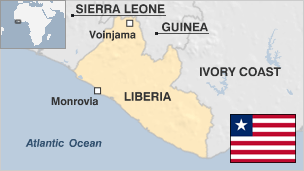
Friday, February 18, 2011

Revolutions in Tunisia and Egypt: Lessons for African Autocrats and Revolutionaries

Ibrahim Al-bakri Nyei
pericle925@yahoo.com


A wave is blowing across the Middle East and North Africa, and there are prospects for other oppressed people in sub-Sahara Africa to gain inspirations from this wind of change blowing upward. Interestingly the people’s power is challenging and bringing down – in matter of days – regimes that have maltreated them and mismanaged their resources. What is doubtful is that whether sub-Saharan Africa, a region whose history is replete with violence and civil crises, can succeed in toppling kleptocrats and autocrats without arms? Two of Liberia’s respected young intellectuals (Ali Sylla and Ali Kaba) argue that such revolutions are mainly possible in ‘highly conscious societies’, they therefore doubt the capacity and ability of the people of sub-Saharan Africa to imitate their northern counterparts in self-organizing and liberating themselves. A reflection of what took place before toppling Mobutu in Zaire, Doe and Taylor in Liberia, Momoh in Sierra Leone, and the numerous past and current civil wars in the region led me to accepting their postulation. I concur that if Liberia had a conscious civil society in 1979, the True Whig Party oligarchy would have come to an end without going through a high scale violent struggle, or if indeed the people were weary of the dictatorships of Doe and Taylor the long bush path to destruction would have been averted and a mass nonviolent citizen protest against the harsh excesses of said regimes would have installed a democratic order.

The Middle-east and North Africa have proven to be different in expressing grievances at autocrats. The people’s power in this region has made significant changes like the Iranian revolution of 1979 and other past civil disobedient actions in that region. Egypt and Tunisia have demonstrated real people’s power in the 21st century, and this is snowballing across the region. What are the lessons now?

Revolutionary successes in Tunisia and Egypt have taught new lessons to African autocrats that they cannot perpetually marginalize and oppress their people, and the people of Africa have been reminded that the real power is in their hands, and where socio-economic conditions become unbearable, political processes repressive, mass mobilization for non-violent revolutions can make the necessary change popularly demanded. Egypt and Tunisia have indeed taught good lessons in 21st century Africa. Interestingly, the developments took place in a continent where processes of regime change and even electoral processes have been very violent. In some instances, military coups hijack constitutional processes, or for the ‘better’ put end to resented dictatorships. In 2010 alone Africa was experiencing civil wars largely necessitated by bad governance and dictatorship in Somalia, Darfur Region of Sudan and DR Congo. Countries like Guinea and Niger were under military leaderships while Madagascar was under a pariah civilian regime that came to power through a putsch.

Unlike the cases of unconstitutional regime changes or military putsches across the continent, no international group or nation has announced any form of sanction or suspension of membership or diplomatic ties against the popular people’s action in either Tunisia or Egypt. Powerful nations and organizations have praised the resilience and determination of the people in their attempts to liberate themselves without armed struggle. This must also teach us that no force is powerful enough to condemn a popular success of regime change planned and executed by the people. Liberia, Sierra Leone, DR Congo, and some other conflict-affected countries in Africa became pariahs because their revolutions were led by greedy and power-drunk politicians whose only motivations were to ascend to power and get access to state resources. Those were not revolutions popularly supported from the grassroots.

What African leaders need to learn now is that they can leave power just in days when their people grow weary of their excesses. This lesson must be a motivation for immediate reforms across the continent. Reforms in constitutions that promote popular democratic participation and accountability are critical to addressing present day governance challenges in Africa. The people’s power in Tunisia and Egypt were expressed against regimes that spanned more than two decades, and resentment has begun to grow in Cameroon and Libya against strongmen rules. This means that Africans are getting increasingly angry with old fashioned leadership, and want to experiment with new ideas of the 21st century deposited in the marginalized young population. Constitutional reform processes must therefore be clear on term-limit for elected offices, and be specific on age range for political offices. Young people are the engine of political development and economic growth across the world. They have shown it in Egypt and Tunisia, and they are mobilizing in Algeria, Libya and Bahrain. They must therefore wake up for national leadership.

In some regions, like in the West, young leaders are progressively ending the poverty of their people through contemporary innovations. Africa is still led by politicians from the 1960s. In Liberia for example, it is most likely that emerging young politicians and technocrats will not easily succeed in transforming the country to a 21st century nation-state with its attendant opportunities while politicians from the 1970s are still struggling for space in the process. Leading oppositions and the key figures in the ruling party in Liberia are politicians from the 1970s - with the least age being 67 - who are still mounting efforts for another six-year political challenge. These people are also succeeding by machinations, co-optations and manipulations of the young people. How then can the young generation lead a progressive and nonviolent revolution in sub-Saharan Africa?

The young people of Africa need to stand up for their rights and demand from their governments accountability in the use of resources and the exercise of power. More to that, the young people need to work and build mass consciousness among their people and begin to take political challenges for higher offices. They must motivate and inspire their people into revolutions that will positively transform their societies and make socio-economic opportunities equitable. These revolutions must be accompanied by strong desires and passions for ending the suffering of the people of Africa. Honest and sincere revolutions in the name of the people can only be executed by young men and women who have high moral character and high sense of political and social responsibility to their people and community.

As for Mohammed Bouazizi of Tunisia, he believed that by committing suicide would have ended his suffering as a young university graduate without a job under a regime that have oppressed him for decades. The self-immolation of this young vegetable seller in December 2010 was the sacrifice for the redemption of his people and his country from an unbearable autocracy. The end of Bouazizi’s life and the liberation of the people of Tunisia has become an inspiration for the self-emancipation of oppressed people worldwide. Bouazizi’s self-immolation did not only expelled Ben Ali and his cronies from Tunisia, but has cost Mubarak his job of 30 years, and is threatening the foundations of other autocrats in Africa. May the souls of Mohammed Bouazizi rest in peace, and may the arches of his soul from the self-immolation be a fertilizer for democracy around the world. Bouazizi has gone to join ranks with other martyrs of African liberation. The ways to commemorate Bouazizi and to ensure that his sacrifice does not go in vain are to ensure that democracy flourish in his native Tunisia and Africa at large; that socio-economic opportunities in employment, heath care and education be available and affordable for the people of Tunisia and Africa at large; and that young Africans continuously challenge autocracies and begin to work towards transforming their countries for the better.